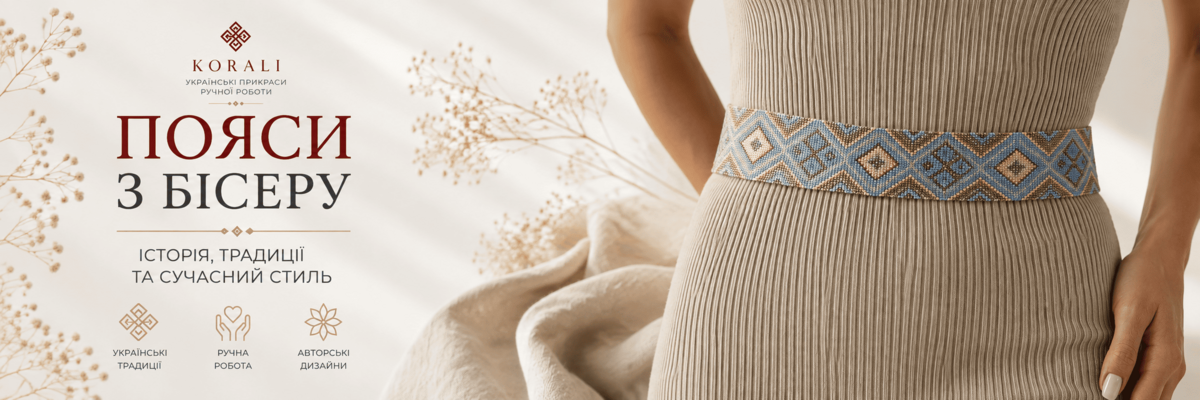
Belts have long been an important element of Ukrainian traditional clothing. They helped shape the silhouette, complemented different garments, and added a distinctive decorative element to regional dress. Their materials, construction, colors, and appearance varied considerably depending on the region and historical period.
Ukrainian beaded belts are particularly interesting because beadwork allows artisans to create detailed geometric compositions, combine multiple colors, and transform the belt into an expressive ornamental element.
Today, beaded belts are being reinterpreted in contemporary Ukrainian design. They can be worn not only with traditional clothing and vyshyvankas but also with dresses, shirts, skirts, linen garments, and minimalist outfits. In this way, traditional beadwork continues to evolve rather than remaining exclusively part of historical dress.
What Is a Beaded Belt?
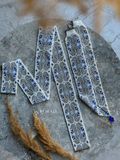
A beaded belt is a decorative waist accessory created using beads as the main visual element. Depending on the design, it may vary in width, length, construction, fastening method, color palette, and ornamentation.
The small size of individual beads makes it possible to create highly detailed patterns. Wider belts provide even more space for complex compositions featuring repeating geometric shapes, lines, contrasting sections, and stylized motifs.
In contemporary styling, a beaded belt can emphasize the waist while also functioning as an independent statement accessory. Depending on its width and pattern, it can either subtly complement an outfit or become its main visual focus.
The History of Beaded Belts in Ukraine
The history of beaded belts should be considered within the broader context of Ukrainian traditional clothing. Different types of belts and waist garments were worn throughout Ukraine, but their names, materials, techniques, proportions, and methods of wearing varied between local traditions.
Beads gradually became an important material in Ukrainian decorative arts and were used to create various forms of jewelry and accessories. In certain regional traditions, beadwork was also incorporated into waist accessories and belts.
For this reason, it would be inaccurate to describe a single design as the universal “traditional Ukrainian beaded belt.” Historical examples need to be understood within their particular regional and cultural contexts.
Beaded Belts of Bukovynian Podillia
One particularly interesting example of Ukrainian beaded waist accessories comes from Bukovynian Podillia. Researchers studying the traditional decorative arts of the region have documented wide beaded belts as part of local clothing traditions.
Historical descriptions mention beaded belts approximately 9.5–12 cm wide. Their broad surfaces provided enough space for elaborate ornamental compositions, making the belt a highly visible decorative component of the outfit.
These documented examples are important because they demonstrate that beaded belts have a historical context within Ukrainian material culture rather than being exclusively a contemporary fashion invention.
The Role of the Belt in Traditional Ukrainian Clothing
A belt helped complete the composition of traditional clothing and define its silhouette. Depending on the regional outfit, it could support waist garments, emphasize the waist, or serve as an important decorative element.
Traditional Ukrainian belts were made from different materials and using different techniques. Woven, braided, textile, and other types existed alongside regional examples incorporating beadwork.
This diversity remains important when discussing Ukrainian belts today. The term “Ukrainian belt” describes a broad group of accessories rather than one universal historical form.
What Is the Difference Between a Beaded Belt and a Kraika?
A beaded belt and a kraika are not the same type of accessory. A kraika is traditionally a woven or braided textile belt, whereas a beaded belt is distinguished by its beadwork construction and ornamental surface.
Both can perform a similar visual role by emphasizing the waist and completing an outfit, particularly when worn with Ukrainian clothing. However, their materials, textures, and methods of production are fundamentally different.
When choosing a belt for a vyshyvanka, it is therefore useful to consider the type of accessory as well as its colors and pattern. A kraika introduces a characteristic textile texture, while a beaded belt draws attention through detailed ornamentation, color, and the distinctive surface created by the beads.
Beaded Apron Belts
A particularly expressive contemporary interpretation is the beaded apron belt — a wide decorative waist piece with an ornamental section extending below the waistline. Its larger surface provides considerably more space for complex patterns and makes the accessory one of the dominant elements of an outfit.
Beaded apron belts may combine geometric motifs, contrasting colors, fringe, and other decorative details. In contemporary artisan work, their designs can draw inspiration from Ukrainian decorative traditions without necessarily reproducing a specific historical artifact.
They can be especially striking when paired with a coordinating necklace or other piece of beadwork. Repeating colors and ornamental elements across the neckline and waist can create a visually unified ensemble.
Patterns in Ukrainian Beaded Belts
The relatively large surface of a belt makes it possible to develop more elaborate ornamental compositions. Designs may feature diamonds, crosses, broken lines, repeating bands, geometric arrangements, and stylized floral elements.
However, it is important not to assign one universal symbolic meaning to every geometric shape. Ukrainian ornament developed across different regions and historical periods, so the interpretation of a particular motif depends on the origin and context of the object.
Contemporary beadwork can reinterpret traditional visual principles or introduce entirely original compositions. This allows modern pieces to maintain a connection with Ukrainian decorative art without presenting themselves as exact replicas of historical designs.
Colors in Beaded Belts
Color has a major influence on the character of a beaded belt. A rich multicolored composition can make the belt the centerpiece of an outfit, while a more restrained palette makes it easier to combine with contemporary clothing.
Red, black, white, green, blue, yellow, gold, and other shades can appear together in complex patterns or be used as individual accents. The final palette depends on the concept of the particular design and the clothing with which it will be worn.
When choosing a beaded belt for a vyshyvanka, there is no need to reproduce every color found in the embroidery. Often, repeating just one or two key shades is enough to create a harmonious connection between the two pieces.
How Are Beaded Belts Made?
Creating a beaded belt begins with planning the overall composition. The artisan determines the shape, dimensions, color palette, and pattern before the beadwork itself begins. For designs with complex geometry, the arrangement and repetition of individual motifs must be carefully considered so that the finished pattern remains balanced across the entire belt.
The beaded surface is then created gradually according to the selected technique and design. Because a belt can contain a large number of individual beads, precision is essential: even a small displacement can affect the geometry and rhythm of the overall ornament.
Once the main beadwork is complete, the edges and fastening elements are finished according to the construction of the particular design. The completed belt is then checked to ensure that its shape, pattern, and structure are consistent.
Wide beaded belts and elaborate apron belts can therefore require considerable time to create, particularly when they feature intricate patterns, multiple colors, and a large number of small details.
How to Wear a Beaded Belt with a Vyshyvanka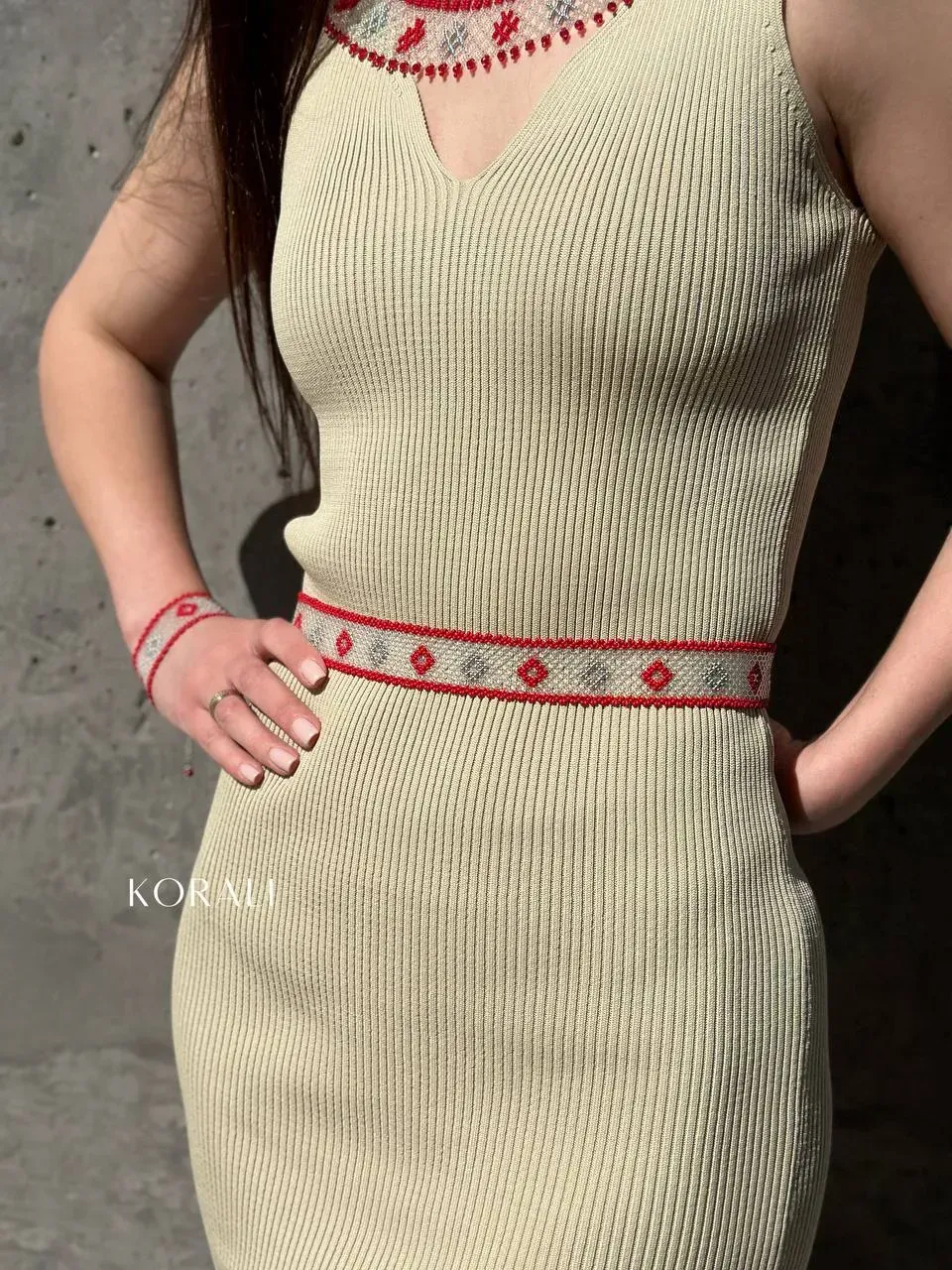
A beaded belt with a vyshyvanka can visually connect an embroidered shirt with a skirt, dress, or other elements of the outfit. The key is to create harmony between the embroidery and the beadwork rather than allowing the two patterns to compete for attention.
If the vyshyvanka features rich multicolored embroidery, consider a belt that repeats one or two of its dominant shades. With a more restrained embroidered shirt, a wider and more contrasting belt can become the main decorative accent around the waist.
The placement and density of the embroidery should also be considered. When the lower part of the shirt already contains elaborate ornamentation, a highly detailed belt may make the overall composition feel too busy. In this case, a more restrained pattern or palette can create better visual balance.
How to Wear a Beaded Belt with Modern Clothing
A Ukrainian beaded belt does not have to be reserved exclusively for traditional or folk-inspired clothing. Contemporary styling allows it to become a distinctive accessory for minimalist dresses, shirts, skirts, linen garments, and other wardrobe essentials.
With a Minimalist Dress
A simple dress provides a neutral background for detailed beadwork. Black, white, ivory, beige, and other understated colors allow the pattern and texture of the belt to remain the main visual focus.
With Linen Clothing
The natural texture of linen pairs particularly well with handcrafted beadwork. A beaded belt can complement a linen dress, an oversized shirt, or a coordinated skirt-and-top outfit while adding color and structure around the waist.
With a White Shirt
A white shirt combined with a simple skirt or trousers creates an understated foundation for a colorful belt. This approach allows even a complex Ukrainian-inspired ornament to feel contemporary rather than costume-like.
With a Monochrome Outfit
The more elaborate the belt, the simpler the rest of the outfit can be. Monochrome clothing and minimal additional accessories give intricate beadwork enough visual space to stand out.
How to Choose a Beaded Belt
When choosing a beaded belt, consider its width, color palette, pattern, construction, and the clothing you plan to wear it with.
A wide belt or beaded apron belt naturally attracts attention and can become the centerpiece of an outfit. A narrower design is easier to incorporate into different looks and can provide a more subtle accent around the waist.
Size is equally important. The belt should sit comfortably at the waist or at the position intended by its particular construction. Always check the measurements and characteristics of the individual design before choosing a piece.
Ukrainian Beaded Belts by KORALI
KORALI creates beaded belts as a contemporary interpretation of Ukrainian decorative traditions. Patterns, colors, and construction can draw inspiration from ethnic aesthetics while remaining suitable for modern styling.
Explore available designs in the Beaded Belts collection.
A handcrafted belt can complement a vyshyvanka for a distinctive Ukrainian look or become an independent statement piece worn with a minimalist dress, shirt, or linen outfit.
How to Care for a Beaded Belt
A beaded belt contains many small interconnected elements and should therefore be handled and stored carefully. This is particularly important for wider designs and beaded apron belts, where maintaining the shape of the entire beadwork surface is essential.
- avoid prolonged contact with water and high humidity;
- keep perfume, cosmetics, and household chemicals away from the beadwork;
- do not sharply fold, twist, or bend the beaded surface;
- after wearing, gently wipe the piece with a soft, dry cloth;
- store the belt separately from other jewelry to prevent snagging and damage.
Wide belts are best stored in a way that prevents sharp creases from forming in the beadwork. Careful handling helps preserve the shape, pattern, and appearance of the piece over time.
The Beaded Belt in Contemporary Ukrainian Style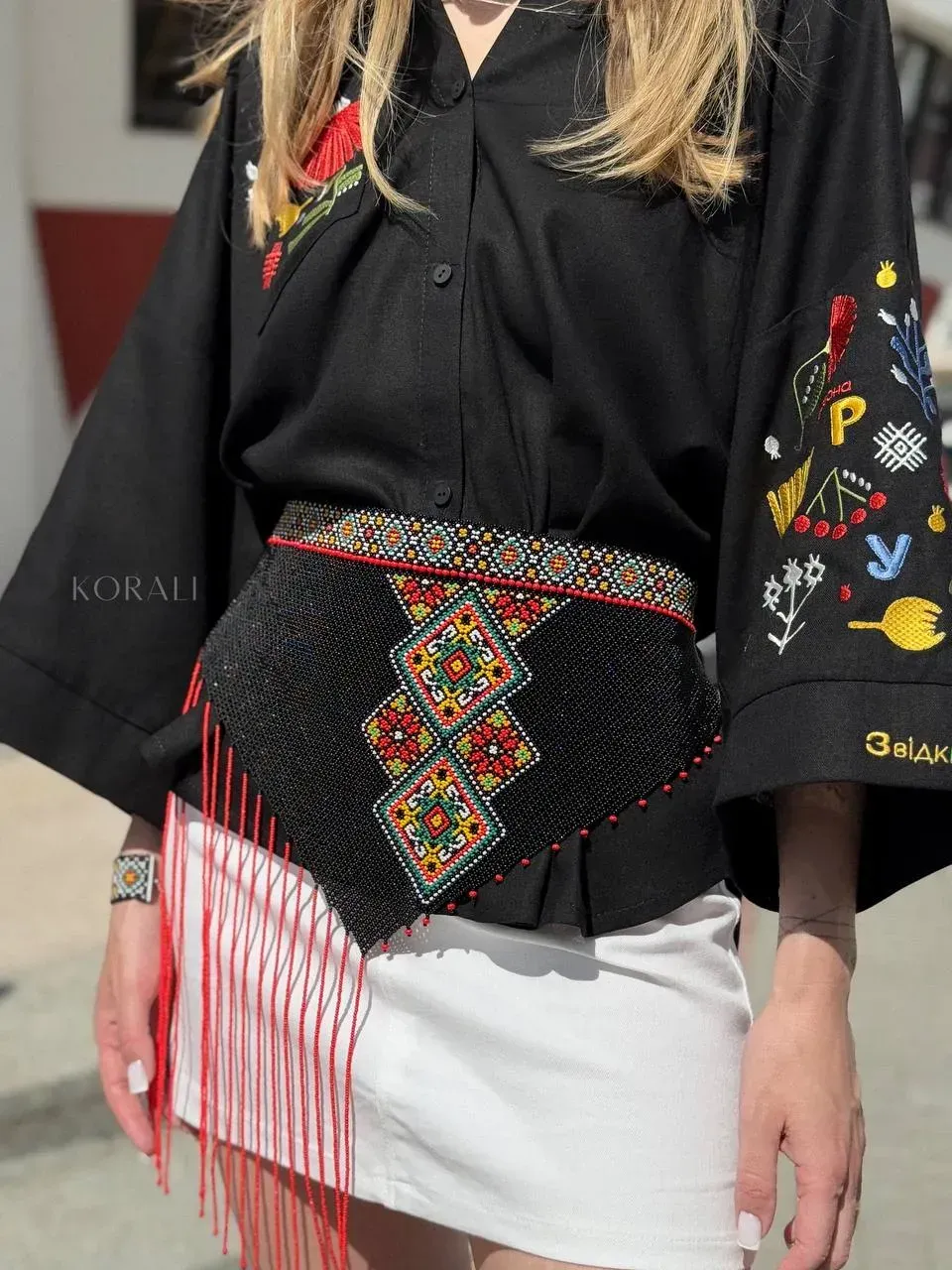
Today, a beaded belt can exist in two contexts at once. It can reference Ukrainian traditions of beadwork and waist accessories while also functioning as a contemporary design object that is not limited to traditional dress.
This versatility makes the belt particularly interesting for modern styling. The same piece can complete a festive outfit with a vyshyvanka and later become a statement accessory worn with a monochrome dress, linen clothing, or a minimalist shirt.
In this way, traditional craftsmanship and ornamental principles continue to evolve through the work of contemporary artisans rather than remaining exclusively part of the past.
Conclusion
Ukrainian beaded belts combine intricate craftsmanship, decorative ornamentation, and a connection with Ukrainian cultural traditions. Historical examples demonstrate that beaded waist accessories have a place within regional Ukrainian dress, while contemporary artisans continue to reinterpret this heritage through new designs.
Today, a beaded belt can be worn with a vyshyvanka, linen clothing, a dress, or a minimalist contemporary outfit. Narrower designs provide a subtle accent, while wide belts and beaded apron belts can become the centerpiece of an entire look.
Explore contemporary handcrafted designs in the KORALI Beaded Belts collection.
Frequently Asked Questions
What is a Ukrainian beaded belt?
A Ukrainian beaded belt is a decorative waist accessory featuring beadwork as its main visual element. Designs can vary in width, construction, color palette, ornamentation, and fastening method.
Were beaded belts part of traditional Ukrainian clothing?
Historical examples of beaded waist accessories are documented in certain regional Ukrainian traditions, including Bukovynian Podillia. However, Ukrainian belts were highly diverse and were made using many different materials and techniques.
What is the difference between a beaded belt and a kraika?
A kraika is traditionally a woven or braided textile belt. A beaded belt differs primarily in its material and construction, with its decorative surface formed using beads.
What is a beaded apron belt?
A beaded apron belt is a wide decorative waist piece with an ornamental section extending below the waistline. Its larger surface provides space for elaborate patterns, colors, fringe, and other decorative details.
Can I wear a beaded belt with a vyshyvanka?
Yes. A beaded belt can complement a vyshyvanka beautifully. Look for a design that shares one or two colors with the embroidery while maintaining a balanced relationship between the patterns.
How do I choose a belt for a vyshyvanka?
Consider the colors, density, and placement of the embroidery. A richly embroidered vyshyvanka often works well with a more restrained belt, while a simpler shirt can accommodate a wider or more elaborate design.
Can Ukrainian beaded belts be worn with modern clothing?
Yes. Beaded belts can be styled with minimalist dresses, white shirts, linen garments, skirts, and monochrome outfits, allowing the beadwork to become the main decorative accent.
How are beaded belts made?
The process begins with planning the dimensions, colors, construction, and pattern. The artisan then gradually creates the beaded surface according to the chosen technique before finishing the edges and fastening elements.
How should a wide beaded belt be stored?
Store it separately from other jewelry and avoid sharp folds or twisting. The belt should also be protected from water, excessive humidity, cosmetics, perfume, and household chemicals.
Where can I find Ukrainian beaded belts by KORALI?
Contemporary handcrafted designs are available in the KORALI Beaded Belts collection, where you can explore individual patterns, colors, dimensions, and product details.
You May Also Like
- Beaded Bracelets — handcrafted accessories that can be coordinated with beaded belts and other elements of contemporary Ukrainian-inspired style.
- Beaded Earrings — discover minimalist and statement designs for everyday, festive, and ethnic-inspired outfits.
- Pendants — decorative accents that can be easily combined with different clothing styles and other handcrafted jewelry.
- Choker: History, Symbolism and Modern Style — explore how chokers have evolved through history and how this distinctive necklace is worn today.
- Beaded Rope Necklaces: History and Modern Style — learn more about beaded rope necklaces, handcrafted techniques, and ways to incorporate them into contemporary outfits.