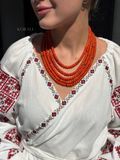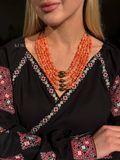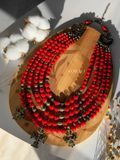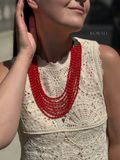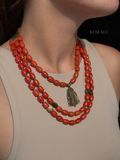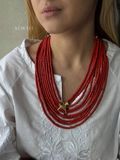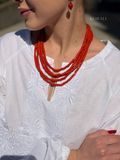
Several strands of vivid red beads around the neck have become one of the most recognizable images associated with traditional Ukrainian women's dress. Coral necklaces were worn with embroidered shirts, skirts, fitted garments and other elements of regional clothing, often as part of a larger composition of neck and chest jewelry.
Yet the story of Ukrainian coral necklaces goes far beyond simply pairing red beads with a vyshyvanka. Natural coral was a valuable imported material, the number of strands varied considerably, and the way necklaces were combined with other jewelry depended on regional traditions, family wealth and the particular clothing ensemble.
Today, coral necklaces have once again become a distinctive feature of Ukrainian style. They can be worn with vyshyvankas and linen dresses as well as minimalist shirts and contemporary clothing, bringing a historically recognizable form into a modern wardrobe.
What Are Ukrainian Corals?
In the Ukrainian cultural context, the word korali (коралі) traditionally refers to necklaces made from coral beads, arranged in one or multiple strands. Red and red-orange varieties became particularly recognizable.
Coral necklaces belonged to the broader category of neck and chest adornments and could form part of an elaborate jewelry ensemble. Multiple strands might be combined with other necklaces, metal elements, coins and pendants to create a rich layered composition.
It is also important to distinguish between the name and the material. Today, jewelry resembling traditional red coral necklaces may be made from various materials, while historically valuable examples were created from genuine coral.
What Are Coral Necklaces Made From?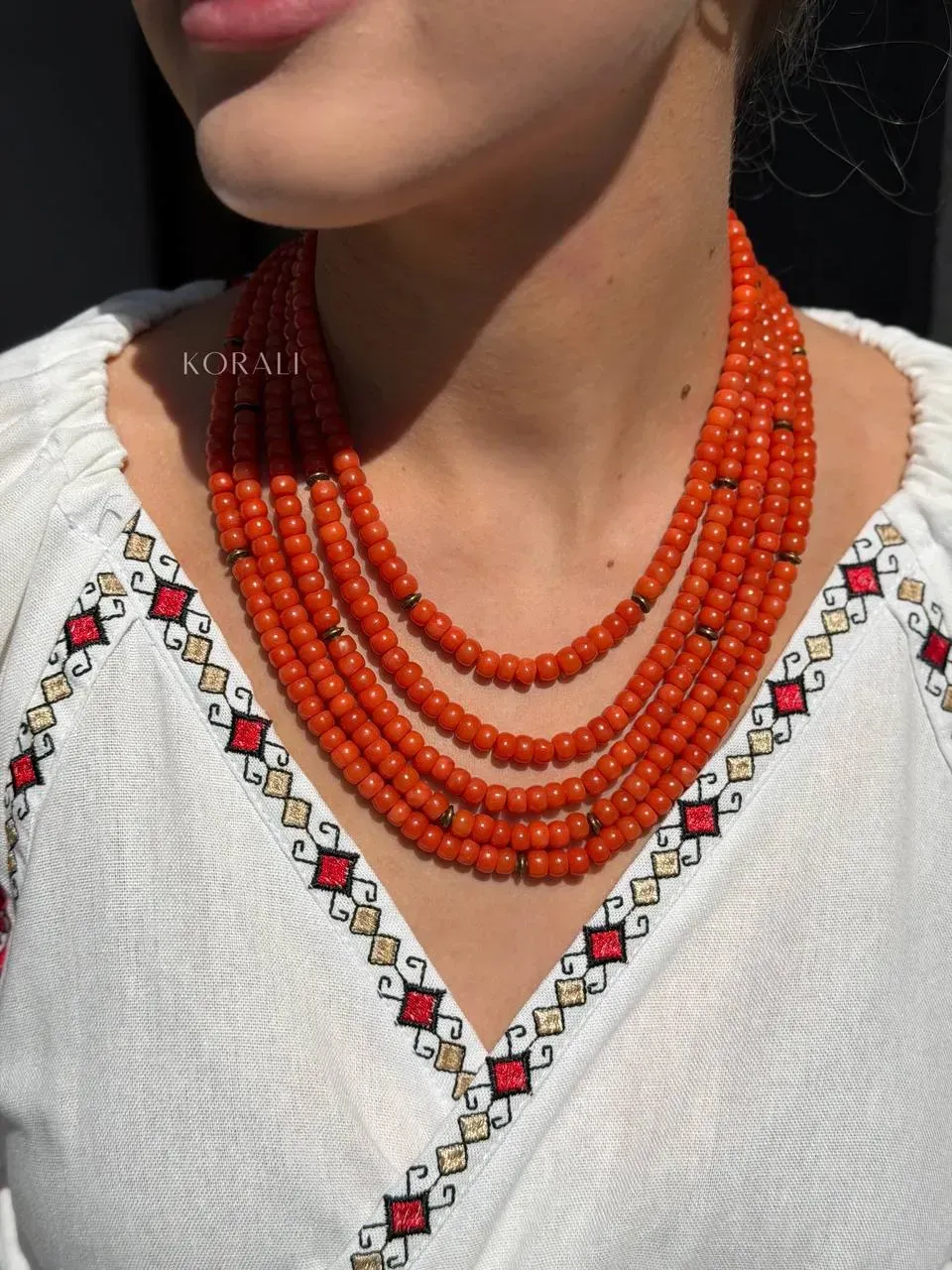
Natural coral is an organic material formed by the skeletal structures of marine coral polyps. Once collected and processed, it can be shaped, polished and transformed into beads of different sizes and forms.
Natural coral was historically a valuable imported material in Ukraine. Since it did not originate locally, it reached Ukrainian lands through trade networks, contributing to both its value and prestige.
Contemporary necklaces inspired by traditional Ukrainian corals are not necessarily made from natural coral. Glass, ceramic, pressed and synthetic materials, as well as other red beads, can be used to create jewelry with a similar visual character.
For this reason, the material of a modern necklace should always be determined from its product description rather than from color or appearance alone.
The History of Coral Necklaces in Ukrainian Dress
Coral necklaces became an important component of women's traditional dress in different parts of Ukraine. Because genuine coral was imported and valuable, owning such jewelry could also reflect the financial means of a family.
Necklaces were carefully preserved and could remain within families for long periods. Depending on the region and the wealth of the wearer, women could wear different numbers of strands, while the individual beads varied in size, shape and quality.
Some of the most visually impressive outfits featured elaborate layered chest arrangements in which red coral strands were combined with metal ornaments, coins, dukach pendants and other necklaces. Such ensembles helped create the visual image that is now strongly associated with traditional Ukrainian women's clothing.
Why Did Red Coral Become So Recognizable in Ukrainian Style?
Red coral necklaces create a striking contrast against a white embroidered shirt. Several strands can form a rich field of color around the neckline and upper chest, making the necklace one of the dominant elements of the entire outfit.
Their prominence, however, was not based on color alone. The value of natural coral, the practice of wearing multiple strands and the way the necklaces were combined with other elements of traditional dress all contributed to their distinctive status.
This visual language remains powerful today. Red necklaces continue to be used as a statement element with vyshyvankas even when the rest of the outfit follows a contemporary silhouette.
Antique Ukrainian Coral Necklaces
Antique Ukrainian coral necklaces may differ considerably from contemporary jewelry in the size and shape of their beads, number of strands, stringing method and the way they were combined with additional decorative elements.
The significance of an antique piece lies not only in its material. Its provenance, regional context and connection to a particular family can also form an important part of its historical value. Necklaces could be preserved for many years and passed from one generation to another.
Appearance alone, however, is not enough to reliably determine the age or origin of a necklace. Material, construction, technique, provenance and professional examination are all important when identifying valuable historical coral jewelry.
How Many Strands of Coral Did Ukrainian Women Wear?
There was no single number of coral strands worn throughout Ukraine. The amount depended on regional customs, family wealth, the age of the wearer and the other pieces included in the overall jewelry ensemble.
Coral could be arranged in multiple rows, sometimes covering a substantial area around the neck and upper chest. Wealthier ensembles could feature more strands or larger and more valuable beads.
For this reason, modern claims about one “correct” number of strands should not be treated as a universal historical rule. Ukrainian traditional dress varied considerably from one region and community to another.
Coral Necklaces with a Dukach
The combination of coral necklaces with a dukach is one of the most striking images associated with traditional Ukrainian women's jewelry. A dukach is a prominent metal pendant, often incorporating a coin or medallion-like central element, that could be worn as part of a larger chest jewelry composition.
Within a layered ensemble, vivid coral strands created a strong field of color while the metal ornament introduced contrast, shine and a distinctive focal point.
Coral necklaces were not limited to combinations with dukach pendants. Depending on the region and ensemble, they could appear alongside other necklaces, coins and metal chest ornaments. This layering is an important characteristic of many historical Ukrainian women's outfits.
The same principle can inspire contemporary styling without requiring a literal reconstruction of historical dress. Several strands of coral can already form the central element of an outfit, with additional jewelry selected more selectively to maintain visual balance.
Were Coral Necklaces Worn the Same Way Throughout Ukraine?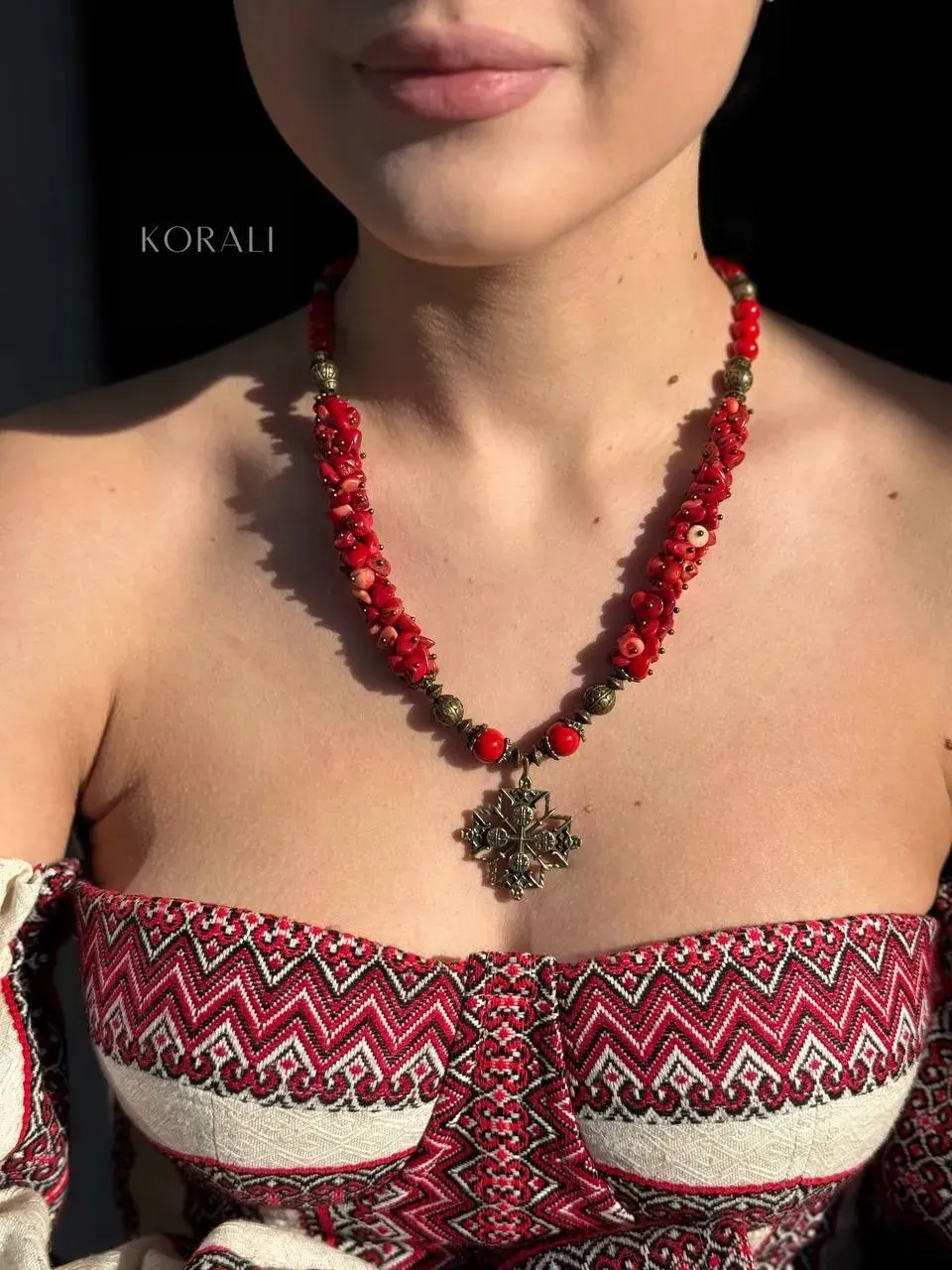
Traditional Ukrainian clothing was never completely uniform across the country. Regional ensembles differed in embroidery, garment construction, headwear, color palettes and jewelry.
The same applies to coral necklaces. In some local traditions they could occupy a prominent place within the chest jewelry ensemble, while elsewhere they were combined with metal, glass and other regional forms of adornment.
The number of strands, bead sizes and methods of combining different jewelry types could also vary. It is therefore more accurate to speak about multiple Ukrainian traditions of wearing coral rather than one universal style.
Natural Coral and Modern Alternatives
The historical value of coral necklaces was closely connected with genuine natural coral. As an imported material, its quality, size and processing influenced the value of the finished jewelry.
Today, red necklaces inspired by historical Ukrainian corals can be produced from a much wider range of materials. In addition to natural coral, artisans may use glass, ceramic and contemporary materials to recreate characteristic colors and forms.
A red necklace should therefore not automatically be described as natural coral based solely on its appearance. When the material is important, always check the specifications of the individual piece.
Coral Necklaces with a Vyshyvanka
Coral necklaces with a vyshyvanka remain one of the most recognizable combinations in Ukrainian style. Red beads create a particularly striking contrast against a light embroidered shirt and can complement red, burgundy, black, or other shades found in the embroidery.
The necklace does not need to match every color of the vyshyvanka exactly. With elaborate multicolored embroidery, coral can work as an independent statement accent. A more restrained embroidered shirt, on the other hand, can be paired with several strands to create a richer composition around the neckline.
It is also worth considering the other elements of the outfit. If the vyshyvanka already features dense embroidery and the look includes statement earrings, a belt, or other prominent accessories, fewer necklace strands may create a more balanced result.
How to Wear Ukrainian Coral Necklaces Today
A contemporary outfit featuring Ukrainian corals does not have to reproduce historical dress. A red necklace can be incorporated into an everyday wardrobe as a distinctive color and texture accent.
With a White Shirt
A simple white shirt provides a clean background for red beads. The combination retains a visual connection with Ukrainian aesthetics while fitting naturally into a contemporary urban wardrobe.
With a Linen Dress
The natural texture of linen pairs beautifully with a statement necklace. Coral-inspired jewelry works particularly well with ivory, white, beige, black, and other understated colors.
With Monochrome Clothing
A black dress, minimalist suit, or solid-colored top allows red coral to become the main focal point. In this type of styling, there is no need to add other folk-inspired elements.
As Part of a Layered Jewelry Composition
For an outfit inspired more directly by traditional Ukrainian aesthetics, several necklace strands can be combined with another chest ornament. Balance is important: the colors, metal details, bead sizes, and embroidery should work together rather than compete for attention.
How to Choose a Coral Necklace
Begin by considering how you plan to wear the necklace. A more restrained design can be easier to incorporate into contemporary everyday outfits, while a multi-strand composition can create a stronger statement with a vyshyvanka or festive clothing.
Pay attention to the material, number of strands, bead size, length, and construction of the particular necklace. These characteristics influence both its appearance and the way it sits around the neckline.
If you are looking specifically for the visual character of traditional Ukrainian corals, consider whether genuine natural coral is essential to you or whether color, form, and overall style are the main priorities.
Coral Necklaces by KORALI
KORALI brings the recognizable aesthetics of Ukrainian necklaces into contemporary jewelry design. Different pieces can complement a vyshyvanka, become part of an ethnic-inspired ensemble, or add a distinctive red accent to modern clothing.
Explore available designs, materials, and individual product details in the KORALI Coral Necklaces collection.
The collection page is the best place to compare individual designs and their characteristics, while this article provides the historical and cultural context behind Ukrainian coral necklaces.
What Did Coral Necklaces Mean in Ukrainian Tradition?
Coral necklaces were more than visually striking elements of women's clothing. Genuine coral was an imported and valuable material, which meant that a substantial necklace could represent a significant part of a family's possessions.
The number of strands, size of the beads, and their quality influenced both the appearance and value of the jewelry. Elaborate multi-strand compositions could reflect a family's prosperity, particularly when coral was combined with valuable metal ornaments and other pieces of chest jewelry.
Such necklaces could also acquire personal and family significance. Well-preserved jewelry could remain within a family for years and pass between generations, becoming part of its history as well as an item of adornment.
Popular accounts sometimes assign universal protective or magical meanings to coral. Ukrainian traditions, however, differed considerably between regions and periods, so such interpretations should be approached carefully rather than presented as a single meaning shared by every historical coral necklace.
How to Care for a Coral Necklace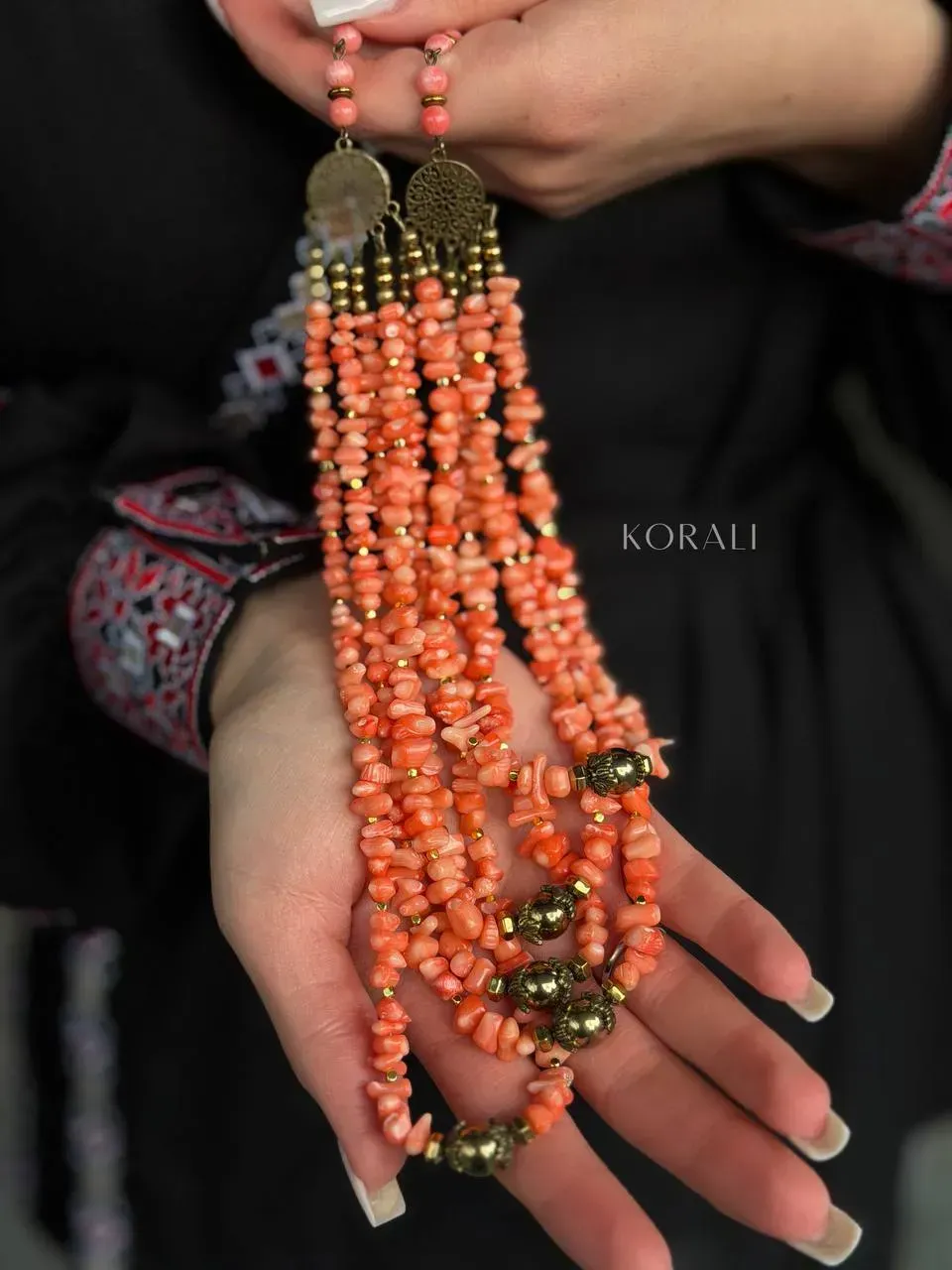
The appropriate care depends first of all on the materials used in the particular necklace. Natural coral is an organic material that requires careful handling, although gentle care is also advisable for necklaces made from other materials.
- avoid prolonged contact with water and excessive humidity;
- keep perfume, cosmetics, and hair products away from the necklace;
- remove the jewelry before showering, swimming, or exercising;
- do not use aggressive household cleaners;
- store the necklace separately from jewelry that could scratch the beads;
- avoid tightly twisting or stretching the strands during storage.
If the necklace is made from genuine natural coral, cleaning methods should be selected specifically for that material. For contemporary pieces, the clasp, stringing material, metal components, and other elements should also be considered.
Ukrainian Corals: A Tradition That Continues to Evolve
Several strands of red beads remain one of the most recognizable elements of Ukrainian women's traditional dress. Yet behind this familiar image lies a much broader history than the striking combination of red jewelry and a white embroidered shirt.
Coral necklaces tell a story of trade networks, valuable imported materials, regional diversity, family jewelry traditions, and the art of building elaborate layered chest compositions.
Today, this heritage is being interpreted in new ways. A coral necklace can complement a vyshyvanka and other elements of Ukrainian dress or be worn with a minimalist shirt, linen dress, or contemporary suit.
This ability to move between historical references and contemporary styling allows Ukrainian coral necklaces to remain relevant rather than existing solely as objects of the past.
Conclusion
Ukrainian coral necklaces are an important part of the history of traditional women's jewelry. Genuine coral was a valuable imported material, while multiple necklace strands could form the foundation of elaborate chest compositions together with dukach pendants and other ornaments.
There was no single universal way of wearing coral throughout Ukraine. The number of strands, bead sizes, combinations with other jewelry, and overall appearance depended on regional traditions, family circumstances, and the particular clothing ensemble.
Today, coral necklaces can be styled with both a vyshyvanka and contemporary clothing. Modern designs inspired by this Ukrainian tradition can be found in the KORALI Coral Necklaces collection.
Frequently Asked Questions About Ukrainian Coral Necklaces
What are Ukrainian corals?
In the Ukrainian cultural context, korali traditionally refers to necklaces made from coral beads and worn in one or multiple strands. Red and red-orange necklaces became especially recognizable.
What are Ukrainian coral necklaces made from?
Historically valuable coral necklaces were made from genuine marine coral. Contemporary jewelry with a similar appearance may also use glass, ceramic, or other materials, so the composition of each piece should be checked individually.
Where did natural coral in Ukraine come from?
Natural coral is not native to Ukraine. It reached Ukrainian lands through trade networks, and its imported origin contributed to its value as a jewelry material.
How many strands of coral did Ukrainian women wear?
There was no universal number. The amount varied according to regional traditions, family wealth, the particular outfit, and the other jewelry included in the chest ensemble.
What is a coral necklace with a dukach?
It is a combination of coral strands with a dukach, a prominent metal pendant often featuring a coin or medallion-like element. Such metal ornaments could form part of elaborate traditional jewelry compositions.
Were all antique Ukrainian coral necklaces red?
Red and red-orange shades became the most recognizable, but the appearance of historical necklaces varied according to the natural material, its processing, age, bead form, and the particular jewelry ensemble.
Can you wear coral necklaces with a vyshyvanka?
Yes. Red necklaces pair particularly well with light-colored embroidered shirts and can complement one or more shades in the embroidery. The number of strands can be adjusted according to the richness of the shirt and other accessories.
Can Ukrainian coral necklaces be worn with modern clothing?
Yes. They can be paired with a white shirt, linen dress, monochrome outfit, or minimalist suit, allowing the red necklace to become the main visual accent.
How can you tell natural coral from an imitation?
Color or photographs alone are not always enough to identify the material reliably. For contemporary jewelry, check the stated materials. Valuable antique pieces are best assessed by a qualified specialist.
How should a coral necklace be stored?
Store it separately from other jewelry and protect it from cosmetics, household chemicals, excessive moisture, and prolonged contact with water. Avoid tightly twisting or stretching the strands.
You May Also Like
- Natural Stone Necklaces — jewelry featuring natural materials, distinctive textures, and varied colors for contemporary and ethnic-inspired looks.
- Ethnic Necklaces — contemporary handcrafted jewelry inspired by Ukrainian culture, traditional forms, and ethnic aesthetics.
- Wooden Necklaces — statement pieces featuring the natural texture of wood, suitable for styling with vyshyvankas and modern clothing.
- Beaded Necklaces — handcrafted beadwork in a variety of patterns and colors for both traditional-inspired and contemporary outfits.
- Jewelry Sets — coordinated combinations of jewelry designed to create a balanced and cohesive look.